Neuroscience
Neuroimaging, neuroinflammation, neuroplasticity and neuroprotection: how the brain responds to the body and how it may be involved in obesity.
Interdisciplinary Research Group
Decoding the body–brain connection
Ponto Cego Lab conducts original research and scientific reviews that integrate neuroscience, nutrition and artificial intelligence. We bring these three fields together to deepen our understanding of the human being, identify unanswered scientific gaps and produce new knowledge that contributes to brain health, physical health and human longevity and, building on that knowledge, to create new neurotechnology tools.
Where disciplines meet, science advances.
Advised by researchers with international careers · USA · Sweden · UK · Belgium
01 — Our approach
Beyond the individual research of each member and of our advisors, the group jointly produces original research and scientific reviews that integrate neuroscience, nutrition and artificial intelligence. Every project follows three stages.
Identifying scientific gaps at the intersection of the three fields and studying, with advanced neuroimaging and biomarkers, how metabolism, inflammation and diet may be associated with changes in the human brain.
Scientific reviews that gather and critically analyze what is already known in neuroscience, nutrition and artificial intelligence, revealing what science has not yet answered.
New knowledge, in articles produced jointly by the group, and, building on it, neurotechnology tools for brain health, physical health and human longevity.
02 — Research area
Our research is not divided into separate lines: it emerges from the intersection of neuroscience, nutrition and artificial intelligence. Each field, seen on its own, leaves blind spots. Ponto Cego Lab works at the center, where the three meet, integrating them to understand the two-way pathway between body and brain, identify scientific gaps and produce new knowledge for brain health, physical health and human longevity.
Neuroimaging, neuroinflammation, neuroplasticity and neuroprotection: how the brain responds to the body and how it may be involved in obesity.
Obesity, systemic inflammation, nutritional status, eating behavior and functionality in aging, and their possible association with brain and mental health.
Scientific reviews on neuroscience and artificial intelligence and perspectives for new neurotechnology tools.
What no single field can see alone. This is where we look for the gaps in science and for new knowledge for brain health, physical health and human longevity.
03 — Members
International research network
The group is advised by internationally recognized researchers, trained at and working with leading research centers in the United States and Europe.

Neuroscientist · Faculty Advisor
PhD · Neuroprotection · Postdocs in the USA and Sweden
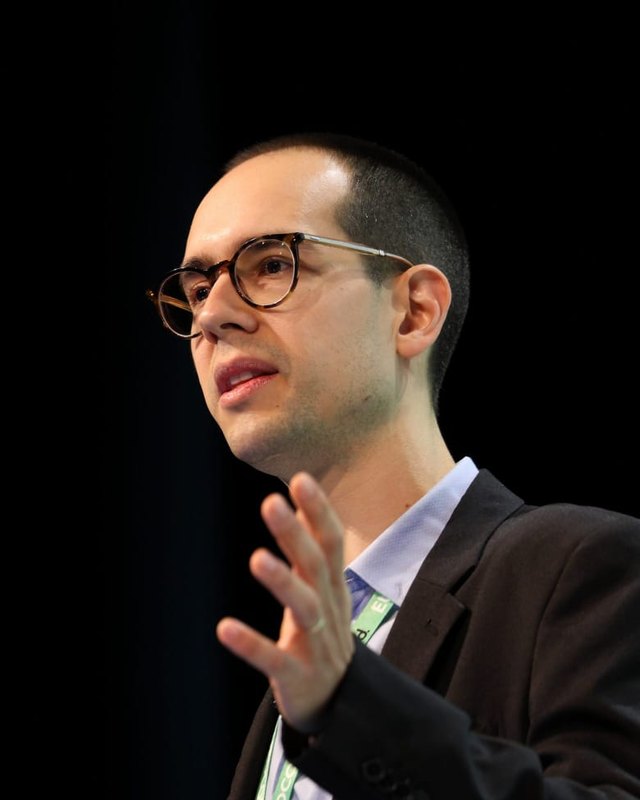
Faculty Advisor · Artificial Intelligence
PhD · Data Science & Machine Learning
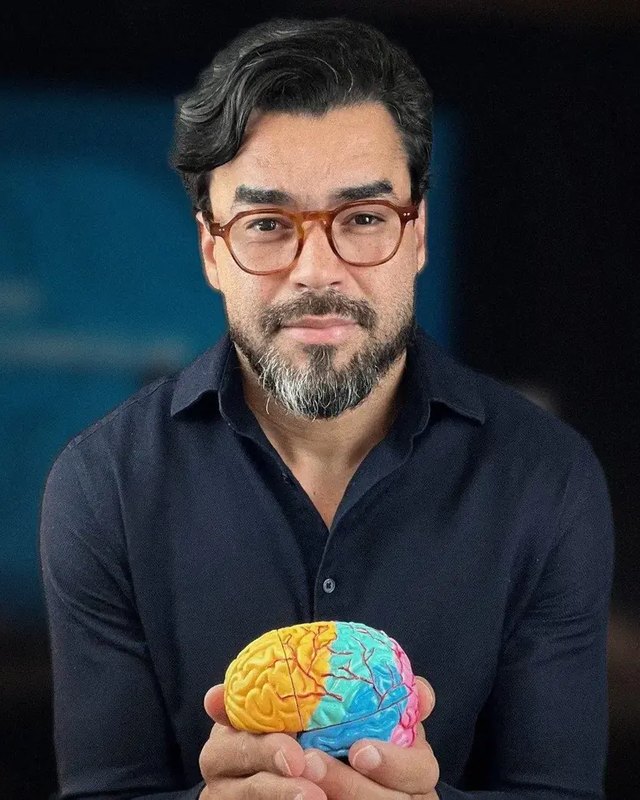
Neuroscientist · Founder and coordinator
PhD Degree in Neuroscience (UFPA)
Neuroimaging & Obesity

Neuroscientist · Nutritionist
MSc candidate in Neuroscience (UFPA) · Nutrition & Neuroscience
04 — Scientific Output
Ongoing research led by members of our group.
Neurobiological profile of body weight underestimation in adults with obesity: integrating immunometabolic biomarkers and multimodal neuroimaging
The study investigates the neurobiological profile of body weight underestimation (body image error) in adults with obesity. It compares three groups (people with obesity with and without weight underestimation, and people without obesity), integrating clinical assessment, body composition by DEXA, immunometabolic biomarkers (CRP, IL-6, TNF-α, insulin and HOMA-IR), genomic ancestry and multimodal magnetic resonance imaging (structural, spectroscopy, diffusion and resting-state functional). The results may contribute to the development of diagnostic biomarkers and future strategies for the prevention and treatment of obesity.
Functional capacity of older adults assessed by the four-meter walk test and anthropometric data compared with symptoms of anxiety and depression
The study assesses the functional capacity of older adults through the four-meter walk test, using smartphone sensors. It then compares these data with anthropometric measures to investigate how nutritional status may relate to functional capacity, and finally examines the relationship between nutritional status, functional capacity and symptoms of anxiety and depression.
Explore the latest articles published by members of our group.
Potential effects of induced focal ischemia in the motor cortex of rats undergoing experimental periodontitis
Chemelo VS, Freire MAM, Bittencourt LO, Frazão DR, Souza-Monteiro D, Cartagenes SC, Gomes-Leal W, Maia CSF, Rocha GS, Falcao D, Lima RR. Heliyon (Elsevier), 2025; 11(3): e42158. Original article. DOI: 10.1016/j.heliyon.2025.e42158
Read articleToward a world model for corrosion science
Coelho LB, Shkirskiy V, Birbilis N. npj Materials Degradation (Nature Portfolio), 2026; 10: 114. Perspective article on artificial intelligence world models.
Read articleDiabetes mellitus and Alzheimer's disease
Lopes CM, Monteiro Junior JCS, Pessoa IA. Arquivos Catarinenses de Medicina, 2018; 47(1): 159–168. Review article (in Portuguese). DOI: 10.63845/t6dy5649
Read article05 — Contact
The group is open to scientific collaboration with researchers, laboratories and institutions, as well as to graduate students interested in research at the intersection of neuroscience, nutrition and artificial intelligence.
Email: cleitonml@ufpa.br · WhatsApp: +55 (45) 99838-8800